In August 2026, a crowd gathered in a medieval church in the German town of Halberstadt to hear a chord change. The previous chord had sounded, without interruption, for two and a half years. The new one will last until October 2027. The piece they were listening to began in 2001 and is scheduled to end in 2640, which makes it a strong candidate for the title of the longest piece of music ever performed.
The question of the longest piece of music has no single answer, because “long” can mean different things: a score designed to be stretched, a system that generates sound for centuries, a recording of extraordinary length, or a performance that tests human endurance. What these works share is more interesting than the records they set. Each treats duration not as a container for music but as one of its materials, the same idea that runs through drone music as a whole.
Vexations: the 18-hour piano piece
The story of extreme duration in Western music usually begins with Erik Satie. His short piano piece Vexations, probably written in 1893, carries an inscription suggesting that its motif be played 840 times in succession, after preparing oneself “in the deepest silence, by serious immobilities”. Whether Satie meant this literally is still debated, and he never published or performed the work.
John Cage took the instruction seriously. On 9 September 1963, he organised the first complete performance at the Pocket Theatre in Manhattan, with a relay of pianists that included David Tudor, Christian Wolff, James Tenney and John Cale. It lasted more than 18 hours, and according to contemporary reports 18 hours and 40 minutes in total. One audience member stayed for the whole performance.
The event mattered beyond its length. It was one of the first public demonstrations that repetition and duration could transform the experience of a piece, and the young John Cale carried that experience into his work with La Monte Young, and from there into the drone music of the 1960s.
ORGAN²/ASLSP: the 639-year organ piece
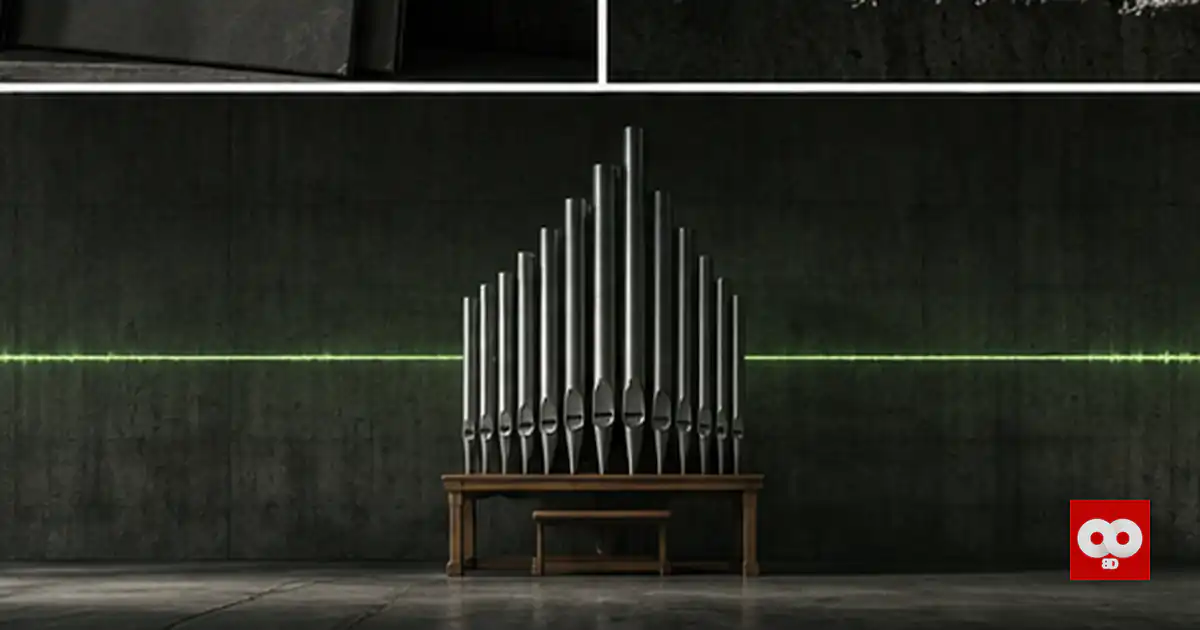
Cage himself produced the most famous long work. His ASLSP (“As SLow aS Possible”) was written in 1985 for piano, and ORGAN²/ASLSP followed in 1987 as a version for organ. Since an organ can sustain a tone for as long as it receives air, the question of how slow “as slow as possible” could be had no obvious limit.
In Halberstadt, the answer is 639 years. The performance began on 5 September 2001 in the St. Burchardi church, with a silence: the first sound, air filling the bellows, gave way to audible pipes only in February 2003. The duration was chosen to look back to 1361, the date associated with the construction of an early organ in Halberstadt’s cathedral, and forward by the same span.
A specially built organ sustains the chords through an electric blower, and weights hold down the keys. Pipes are added or removed by hand at each change. According to the Associated Press report on the change of 5 August 2026, the chord went from seven notes to eight, which marked the completion of about 4% of the work. The next change is set for 5 October 2027, when the E4 pipe will be released, and the piece is scheduled to end on 4 September 2640. The site’s glossary entry on ORGAN²/ASLSP in Halberstadt gives more background.
What makes the project remarkable is not only its length but its institutional design. It depends on a foundation, a church, volunteers and visitors who will be replaced many times before it ends. The music is, in a sense, a promise made to people not yet born.
Longplayer: one thousand years without repetition
If ORGAN²/ASLSP stretches a score, Longplayer generates one. Composed by Jem Finer, best known as a founding member of The Pogues, it is described by the project itself as a one thousand year long musical composition, developed between 1995 and 1999 with the arts organisation Artangel. It began playing at midnight on 31 December 1999 and is designed to continue without repetition until the last moment of 2999.
The source material is short: a recording of singing bowls. A computer program plays six sections of it simultaneously, each transposed and advancing at its own rate, so that the combination heard at any moment will not recur for a thousand years. The main listening post is the lighthouse at Trinity Buoy Wharf in east London, and the piece can also be heard online.
Longplayer is as much about survival as about sound. Its creators expect today’s computers to become obsolete many times over, so the score is designed to be playable by other means, including by human performers. In this respect it resembles the thinking of The Long Now foundation: a work built to outlast the technology and the culture that produced it.
Long recordings: The Disintegration Loops and Everywhere at the End of Time
Some of the longest works are recordings rather than performances. William Basinski’s The Disintegration Loops runs to almost five hours across four volumes released in 2002 and 2003. Its opening piece alone is a 63-minute recording of a tape loop gradually falling apart, and the work’s length is inseparable from its subject: decay can only be heard over time.
The Caretaker, the alias of Leyland Kirby, took the idea further with Everywhere at the End of Time. Released in six stages between 2016 and 2019, it comprises more than six and a half hours of music built from degraded samples of 1920s and 1930s ballroom records, portraying the progression of dementia. Its length is the point: the listener lives through the slow erosion of memory rather than hearing it described.
Long-form drone records belong to the same lineage. Éliane Radigue’s three-hour Trilogie de la Mort and the extended installations of La Monte Young, discussed in the guide to essential drone music albums, show how sustained sound and great length reinforce each other.
Why make music this long?
Several motivations run through these works.
Changing the listener’s sense of time. A piece that cannot be heard in full shifts attention from the whole to the present moment. In Halberstadt, no visitor hears more than a chord or two; the experience is of standing inside a single sound that has existed for years.
Making a statement about scale. ORGAN²/ASLSP and Longplayer measure human life against centuries. They connect to the idea of deep time, the geological and cosmic timescales against which human history is brief.
Testing the medium. Vexations tests performers, The Disintegration Loops tests magnetic tape, Longplayer tests computing and institutions. In each case, length exposes what usually stays hidden.
Extending the logic of the drone. A drone suspends harmonic movement so that the interior of a sound can be heard. Extreme duration does the same with musical form. The site’s analysis of compositional approaches in drone music describes this shift from events to states; the longest pieces simply push it to its limit.
Listening to the impossible
None of these works can be heard in full by one person, and that is part of their design. They can still be visited. Longplayer streams online and plays in its lighthouse; the Halberstadt church can be visited and the organ heard in person, with each chord change drawing a crowd; the long recordings are available in full for anyone willing to set aside an afternoon or an evening. The guide to listening to drone music offers practical advice for long sessions, and the Glossary entry on durational performance traces the wider artistic tradition.
What remains after encountering them is a changed relationship with time. A chord that will sound until next year, a composition that started before most of its listeners were born and will end long after them: such works ask what it means for music to be finished, and suggest that some music is not meant to be.